
An international study coordinated by IRCCS San Raffaele Hospital and Memorial Sloan Kettering Cancer Center in New York has shown that a high-fiber diet can slow the progression of early-stage disease.
A new international study led by the team of Dr. Matteo Bellone, Head of the Cellular Immunology Unit at IRCCS San Raffaele Hospital, and Dr. Urvi A. Shah, hematologist and oncologist at Memorial Sloan Kettering Cancer Center in New York, reveals that a fiber-rich, plant-based diet can modulate key biological mechanisms to delay progression toward multiple myeloma. The research was largely carried out also by Laura Lucia Cogrossi, who at the time of the study was a PhD student at Vita-Salute San Raffaele University and is now a postdoctoral researcher at the Cancer Research UK Manchester Institute in the United Kingdom.
In the article just published in Cancer Discovery, the researchers demonstrate that modifying one’s diet — a deceptively simple everyday action, — can act as a true “biological switch,” capable of influencing metabolism, immunity, and the composition of the gut microbiota. «For the first time, we have shown that a structured nutritional intervention can affect the mechanisms underlying myeloma progression», explains Dr. Bellone.
Dr. Shah further adds that «Most patients with early myeloma precursor conditions are simply monitored, which can lead to significant anxiety. Our study is the first to show that a fiber-rich, plant-forward diet can improve gut health, metabolism, and immune function in these patients and might help slow the disease from advancing to the cancer myeloma. Knowing that a simple, low risk dietary shift may make a difference can feel empowering.»
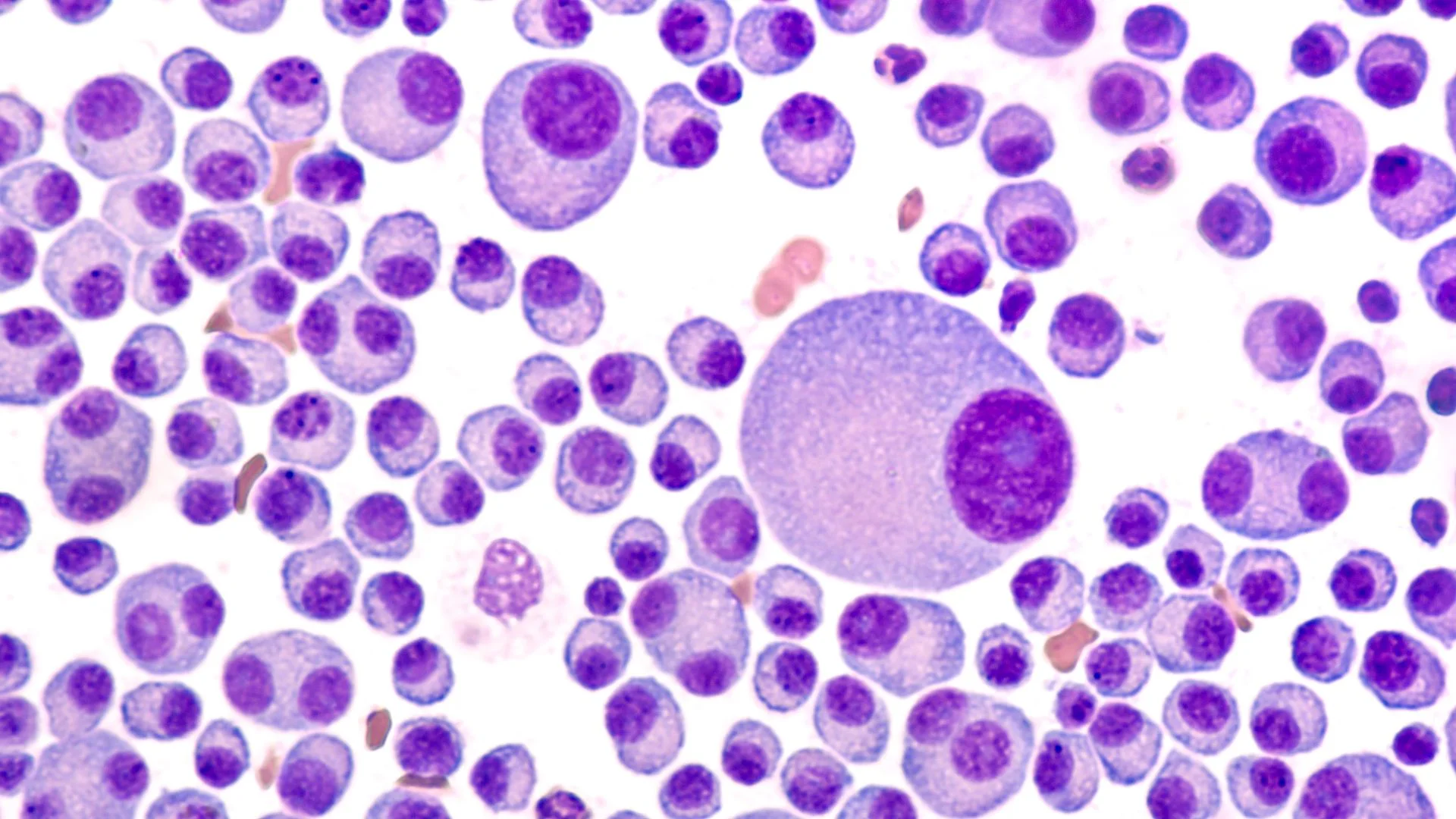
Multiple myeloma: a disease that develops silently
Multiple myeloma is a blood cancer that affects more than 160,000 people worldwide each year, including approximately 5,000 in Italy. It almost always arises from two precancerous conditions—MGUS (Monoclonal Gammopathy of Undetermined Significance) and SMM (Smoldering Multiple Myeloma)—which occur in more than 5% of individuals over the age of 50.
These conditions have been defined as “states of biological anticipation”: they cause no symptoms but may evolve over the years into overt myeloma. Understanding how to slow this evolution remains one of the most urgent challenges in hematology.
From gut microbiota to bone marrow: a connection reshaping medicine
As early as 2018, at San Raffaele, the Bellone group published one of the first studies linking the gut microbiome to myeloma progression. That work showed how specific bacteria can fuel inflammatory and immune pathways that accelerate disease development.
This insight laid the foundation for an entire line of research: if the microbiome can push the disease forward, perhaps it can also hold it back. The new study stems precisely from this idea, integrating clinical science and experimental biology as complementary lenses to answer a single question: can diet become a therapeutic tool?

The clinical study: what happens when dietary habits change
The NUTRIVENTION trial, led by Dr Shah at Memorial Sloan Kettering was a single-arm, single-center study that enrolled 23 individuals with MGUS or SMM and an elevated body mass index who followed a high-fiber, plant-based diet for 12 weeks without any caloric restriction.
The goal was not to “eat less” but to “eat differently,” prioritizing fruits, vegetables, legumes, and whole grains.
Contrary to common assumptions, the study demonstrated that a fiber-rich diet is not only feasible but also associated with minimal and well-tolerated discomfort. As a result, more than 70% of participants chose to continue the dietary regimen well beyond the 12-week intervention.
Data obtained through patient-reported food diaries showed that, over time, the body appears to “hit the brakes”: body weight decreases, insulin sensitivity improves, inflammation diminishes, and the gut microbiome becomes enriched in bacterial species capable of producing butyrate—a molecule with known anti-inflammatory and antitumor properties.
Although the study was not designed to evaluate disease outcomes, among the eight participants assessable for this parameter, the trajectory of the monoclonal protein (M-spike)—the main indicator of progression from a precursor condition to multiple myeloma—stabilized, and in two cases even improved. «It is as if a disease accustomed to progressing slowly yet inexorably had suddenly encountered an unexpected obstacle», comments Dr. Bellone.

San Raffaele’s central contribution: uncovering the biological mechanisms
The core of Dr. Bellone’s research was precisely this: demonstrating not only that diet can alter clinical parameters linked to disease progression, but why.
The experiments at San Raffaele aimed not only to show that a high-fiber diet can change clinical parameters associated with the disease’s progression, but also to seek explanations for how it does so.
The results showed that the diet reshaped the animals’ gut microbiota, increasing the production of short-chain fatty acids such as butyrate. These molecules reduced disease aggressiveness in vivo and slowed the proliferation of malignant plasma cells in vitro.
The diet also reprogrammed the immune cells in the bone marrow—the tumor’s site of origin—steering them toward a potentially antitumor phenotype. Thanks to these changes, the progression toward overt myeloma in the mice was dramatically delayed.
Dr. Bellone explains:
«It is as if the microbiome, rewired by diet, reshaped the entire tumor microenvironment, making it less conducive to myeloma cell growth and more supportive of an effective immune response. One possible explanation is that molecules such as butyrate, produced by gut bacteria through fiber fermentation, may reach the bone marrow and redirect the behavior of immune cells toward an antitumor response while slowing malignant proliferation. A true cascade effect: from diet to microbiome, from microbiome to immune system, from immune system to the tumor».

Perspectives: from the dinner table to the clinic
In light of these findings, the research opens new avenues: larger clinical trials, personalized interventions, and potential combinations of diet with existing therapies. This approach does not replace oncological treatments but may complement and even enhance them by acting on a biological domain that is often overlooked: lifestyle.
In this context, a new multicenter clinical trial — led by San Raffaele Hospital and funded by Fondazione AIRC for Cancer Research — will be launched in Italy (rif. dr. Tommaso Perini, Hematology and Bone Marrow Transplant Unit) to expand and validate the current results. This project is part of the broader activities of San Raffaele’s Comprehensive Cancer Center, which integrates research, clinical practice, and technological innovation to accelerate the translation of scientific findings into patient care. The study aims to demonstrate that plant-based diets significantly alter the gut microbiome, increasing the production of short-chain fatty acids in patients with SMM (Smoldering Multiple Myeloma) irrespective of their body weight.
“Our goal – concludes Dr. Bellone – is to transform a daily action—eating—into a scientifically grounded preventive tool. It is a path that requires rigor, but one that has the potential to improve the quality and outlook of life for thousands of individuals.”
This study was made possible thanks to the support of Fondazione AIRC, Blood Cancer United, the Paula and Rodger Riney Foundation, the National Institutes of Health (NIH), the Parker Institute for Cancer Immunotherapy, the International Myeloma Society, the Swedish Research Council, and additional institutional funds and international academic collaborations.
You might be interested in
Wiskott-Aldrich syndrome: a new therapy corrects the genetic defect at the root of the disease

JOIN4ATMP: the new video on ATMP development in Europe

Primary CNS Lymphoma: Trial Confirms Optimal Treatment Strategy