All the news

Neuromyelitis optica: allogeneic haematopoietic stem cell transplantation keeps the disease at bay

29 June 2026
Research

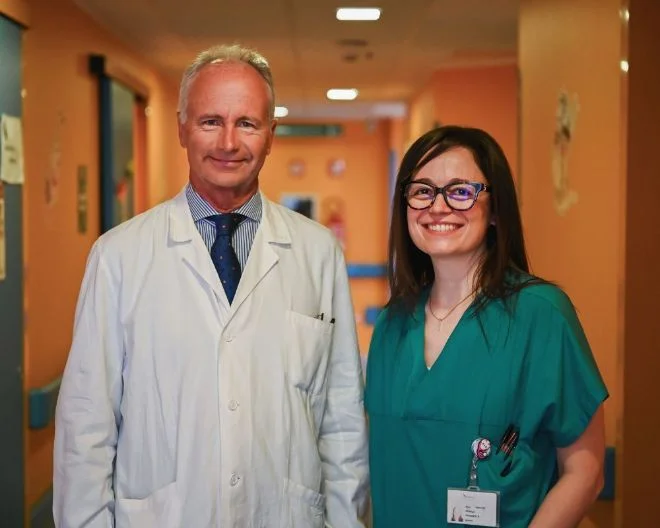
Two patients with neuromyelitis optica, a rare and severe autoimmune disease of the central nervous system, show no signs or symptoms of the disease 15 and 16 years after undergoing allogeneic haematopoietic stem cell transplantation. The findings, published in Med Cell Press, comes from a multidisciplinary research conducted by scientists at Vita-Salute San Raffaele University and IRCCS San Raffaele Hospital, led by Professors Fabio Ciceri and Massimo Filippi, in collaboration with Dr Raffaella Greco, Dr Lucia Moiola, Dr Giorgio Orofino and Dr Angela Genchi.

Neuromyelitis optica: an autoimmune disease

In neuromyelitis optica, the immune system attacks and destroys astrocytes, the support cells of neurons. As a result, neurons lose myelin — the protective sheath that speeds up nerve signal transmission — and undergo degeneration and death. Standard treatment relies on immunosuppressants such as corticosteroids, or monoclonal antibodies, which dampen the autoimmune response without fully suppressing it and must be taken for life.

For patients in whom standard treatments prove ineffective, and in carefully selected younger patients, allogeneic haematopoietic stem cell transplantation is a possible therapeutic alternative. The procedure replaces the patient’s autoreactive immune system with a new one from a compatible donor, promoting the reconstitution of a new healthy immune system capable of tolerating the host’s tissues.

Full and lasting remission: the transplant results

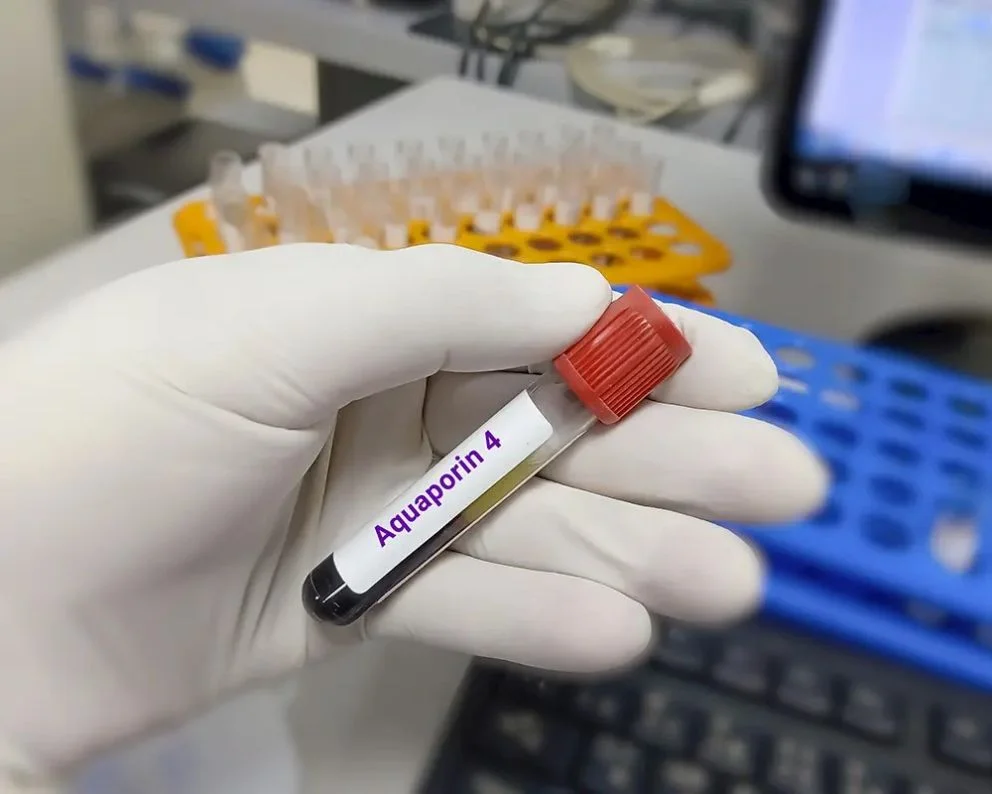
Both patients included in the study had a particularly aggressive form of neuromyelitis optica, refractory to all available treatments. Following the allogeneic transplantation, they achieved complete and lasting remission, confirmed by neurological and radiological analysis. Their immune system was fully reconstituted: testing revealed the emergence of new functional and tolerant lymphocytes derived from the donor stem cells and, critically, the disappearance of anti-aquaporin-4 autoantibodies — the protein expressed by astrocytes that drives the disease’s pathogenic mechanisms.

The procedure was well tolerated, with no episodes of graft versus host disease, a transplant complication in which donor immune cells attack the host’s tissues. Neither patient now requires immunosuppressive treatment.

Treatment-related complications

Two long-term complications were recorded. One patient developed multiple lymphadenopathies — enlargement of the lymph nodes, the sites where immune cells mature — which resolved spontaneously. The other developed bladder carcinoma in-situ successfully treated surgically.

The development of malignancies after stem cell transplantation is a known risk and requires long-term oncological monitoring. Patient selection must be rigorous: the procedure should be considered when standard therapeutic option has proved ineffective and carefully evaluating the risk/benefit ratio. Further studies on larger cohorts are needed to consolidate the safety and efficacy data

the study authors note.

Read the full paper here

Share news

You might be interested in

UniSR PhD Courses 2025-2026
Research22 May 2026
UniSR PhD Courses 2025-2026
UniSR designated as WHO tuberculosis research centre: what we will do together
The University23 March 2026
UniSR designated as WHO tuberculosis research centre: what we will do together
World Rare Disease Day: Research at UniSR Continues All Year Round
Research28 February 2026
World Rare Disease Day: Research at UniSR Continues All Year Round
Multiple sclerosis, breakthrough in research: researchers have identified a molecule that promotes repair of the nervous system
Research21 January 2026
Multiple sclerosis, breakthrough in research: researchers have identified a molecule that promotes repair of the nervous system