
Technology addiction is one of the least visible yet most pervasive public health concerns among younger generations. Across Europe, data from the Scientific Observatory on Digital Education (2026) indicate that 77 per cent of adolescents describe themselves as dependent on their devices.
TECHnotOXIC, the new contemporary art project by artist Christian Fogarolli, places Vita-Salute San Raffaele University as the lead institution. Selected by the Italian Ministry of Culture under the Italian Council programme (14th edition, 2025), the project will travel to the Futurium in Berlin and the Fondation Boghossian in Brussels.
If I had to describe the project in three words, I would use: unconscious, addiction and control
says artist Christian Fogarolli.
TECHnotOXIC poses a question that concerns millions of people: what happens to the mind, to relationships, to one's sense of self when technology stops being a tool and becomes an addiction?
Technology addiction in young people: the data behind an emergency
A 2024 report by the ISS (Istituto Superiore di Sanità - Italy's National Institute of Health) shows that four in five adolescents use social media daily and one in ten is at risk of developing a behavioural addiction.
Clinical recognition of the phenomenon is already under way. In 2019, the World Health Organisation added “gaming disorder” to the ICD-11, the International Classification of Diseases, as a behavioural addiction. This signals that the pathological relationship with digital technology is no longer merely a subject of sociological debate, but of structured clinical attention. TECHnotOXIC operates in this territory, choosing contemporary art as a tool for investigation and restitution.
«Contemporary art – Fogarolli explains – beyond its role for the individual who produces it, can be an instrument not only of communication but of reflection. It can raise problems and themes. It certainly cannot resolve them, but it allows us to question individual and collective concerns.»
What is TECHnotOXIC
TECHnotOXIC, written deliberately in mixed cases to evoke the absence of oxygen generated by technological overuse, was born from fieldwork conducted by Fogarolli at specialist centres treating digital addictions. The project explores phenomena such as smartphone addiction, social isolation, compulsive nocturnal device use, cyberbullying and online gambling: all behaviours that reveal how increasing technological mediation can alter perceptions, choices and lifestyles, generating new forms of alienation.
Among the most vulnerable groups, young people with technology addiction are a central focus of artistic inquiry. Fogarolli's work gathers direct testimonies from patients, practitioners and researchers to build a visual corpus that conveys the emotional, cognitive and relational complexity of these experiences.
Fogarolli’s artistic lines of inquiry guide us towards an understanding of urgent issues. Our aim is not to study art as an object of the past but as living matter of our present life, to use it as a way of questioning the world we inhabit. The works are realised by Fogarolli as the poetic outcome and restitution of his research, and the touring exhibition is conceived as a genuinely experiential device for raising awareness and deepening understanding of these central and timely concerns
says Prof. Francesca Pola, UniSR – ICONE academic lead.
UniSR as lead institution: art, neuroscience and a transdisciplinary approach
Vita-Salute San Raffaele University leads the project through ICONE – European Research Centre for the History and Theory of the Image, a centre that operates in partnership with institutions including the Warburg Institute in London and the Centre d’étude de l’écriture et de l’image at Université Paris-Diderot.
«TECHnotOXIC is an Italian Council project with an international commission, aimed at promoting Italian art abroad and enriching the country’s contemporary artistic heritage. It fits fully within the vision of continuous, real-time interaction between academia, the art world and wider society that we pursue at UniSR — in the close relationship between research, education and what we call the third mission» Prof. Pola notes.
The dialogue between artistic practice, art history and criticism, medicine, psychology and neuroscience builds a transdisciplinary approach that integrates different fields of knowledge to understand and address the challenges of the present.
Italian Council 2025: a recognition with an international reach
The TECHnotOXIC project has been realised with the support of the Directorate-General for Contemporary Creativity of the Italian Ministry of Culture, through the Italian Council programme (14th edition), a programme dedicated to the international promotion of Italian contemporary art.
The scale of competition gives a measure of the achievement: out of 337 applications received, 55 projects were selected in total, of which only 13 fell under Track 1 (International Commissioning of Works of Art) the track in which TECHnotOXIC is included.
The programme, active since 2017, supports the production, dissemination and international visibility of Italian contemporary creation in the visual arts.
International venues and the permanent collection
The project will be at the centre of two international solo exhibitions. The first at the Futurium – The House of Futures in Berlin (September–December 2026), a space dedicated to the relationship between science, technology and the future, located in the German capital’s governmental district. The second at the Fondation Boghossian in Brussels (April-July 2027, dates to be confirmed). These will be accompanied by screenings, talks and presentations at UniSR, MUSEION in Bolzano and other venues.
The works will enter the permanent collection of MUSEION, Bolzano’s Museum of Modern and Contemporary Art, securing a lasting contribution to Italy’s artistic heritage.
Who is Christian Fogarolli?
A multidisciplinary artist from Trento (b. 1983), Fogarolli trained in archaeology and art history, specialising in diagnostics and art restoration. His research develops at the intersection of visual arts and science: through installations, photography, sculpture and video, his works prompt critical reflection on the relationship between mind, body and technology, exploring how behaviours (lawful or otherwise) are constructed within systems of norms and power.
With TECHnotOXIC, technology addiction moves beyond the domain of statistics and becomes the subject of artistic inquiry, entrusted to a language capable of conveying what numbers record but cannot tell: the subjective experience of those living these forms of alienation.
This project is supported by the Directorate-General for Contemporary Creativity of the Italian Ministry of Culture under the Italian Council program (14th edition, 2025), with the aim of promoting Italian contemporary art internationally.

TECHnotOXIC is a project promoted and realised by ICONE – European Research Centre for the History and Theory of the Image, the creative and intellectual core of the Master’s degree programme in Theory and History of the Arts and the Image (Faculty of Philosophy).
The programme trains graduates able to work at the intersection of artistic practice, art history and criticism, research and international curatorship.
Find out more here!
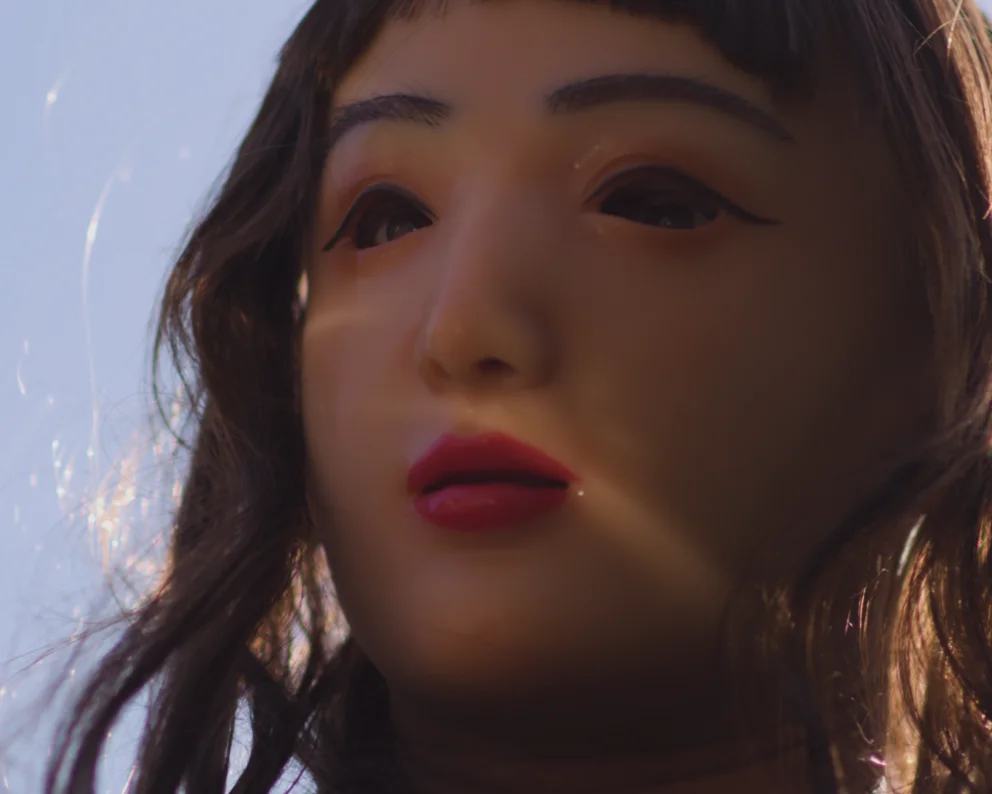
Credits cover image: Christian Fogarolli, TECHnotOXIC, Film Still, 2026
You might be interested in

UniSR PhD Courses 2025-2026

Workshop: Generality and Impredicativity
San Raffaele School of Philosophy 2024